How to Choose Mother Toilet Paper Tissue for Wholesale?

Time:2026-10-09 Author:Amelia
0%

Choosing Mother Toilet Paper Tissue for wholesale requires more than comparing the lowest quoted price. Product consistency, converting performance, packaging, and delivery reliability directly affect your margins. Grand View Research estimated the global tissue paper market at approximately USD 87.7 billion in 2023. Its report also projects continued growth through 2030, supported by hygiene awareness, urbanization, and expanding retail channels. These trends create opportunity, but they also increase supplier competition.

Clarify what Mother Toilet Paper Tissue means in your supply chain. Some suppliers use the term for jumbo parent rolls. Others describe finished toilet tissue products. Ask for the basis weight, ply structure, roll width, diameter, core size, fiber composition, and moisture resistance. A sample should be tested on your actual converting or dispensing equipment. It should unwind smoothly, remain soft, and avoid excessive lint. Small defects become expensive when multiplied across pallets.

Smithers’ tissue industry research highlights the importance of resource efficiency, premium softness, and operational productivity. Therefore, evaluate more than appearance. Review tensile strength, absorbency, brightness, recycled content, and packaging protection. Request recent laboratory results and production records where available. Check pallet dimensions, minimum order quantities, lead times, and carton compression resistance. One overlooked detail can delay a container.

A lower price may hide higher waste.

Reliable wholesale decisions also require supplier verification. Confirm factory capacity, quality-control procedures, export experience, and responsiveness during complaints. No report replaces practical testing. Market data offers direction, not certainty. Your customer profile, climate, equipment, and storage conditions may produce different results. A careful trial order is often wiser than a large commitment.
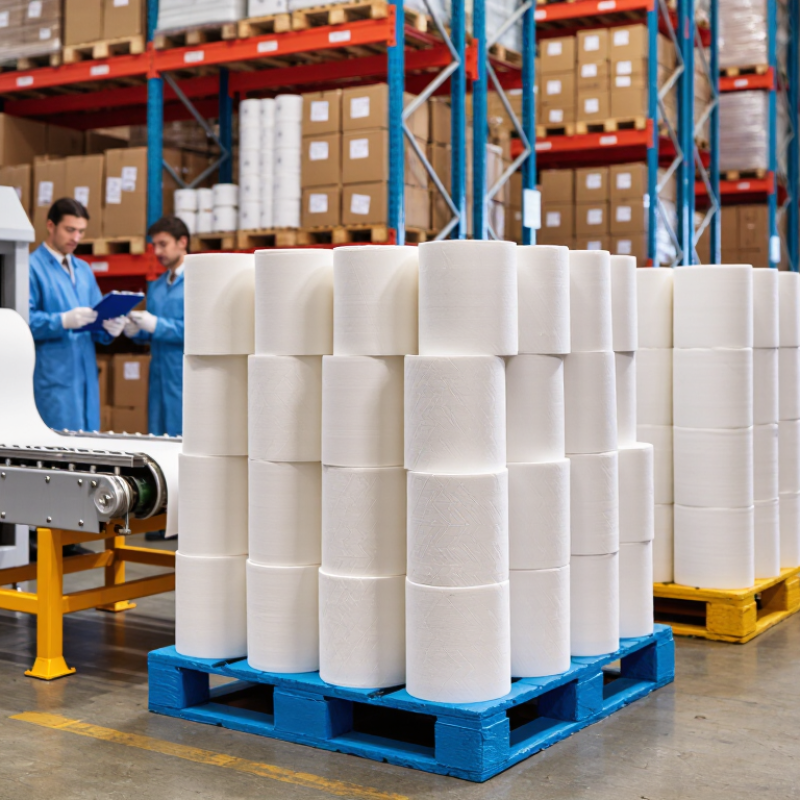
How to Choose Mother Toilet Paper Tissue for Wholesale?

Understanding Wholesale Toilet Paper Tissue Requirements

Wholesale toilet paper tissue requirements begin with the buyer’s actual converting process.

Mother rolls must match the machine’s width, diameter, core size, and winding direction. Start with demand. Estimate monthly usage from hotel rooms, offices, retailers, or household packs. Seasonal changes can affect orders more than expected.

In wholesale projects, I have learned that softness alone does not determine value. Buyers should compare ply count, basis weight, absorbency, tensile strength, and dust levels.

A clear specification sheet prevents costly misunderstandings. Small details matter. Ask for production samples, laboratory results, and batch records before placing a large order.

Supplier consistency is especially important when several deliveries use the same equipment.

Packaging requirements also deserve careful attention. Rolls need protection from moisture, crushing, and warehouse contamination during transport. Confirm carton strength, pallet dimensions, labeling, and storage conditions.

Local packaging and product safety rules should guide every shipment. I once underestimated storage space because I measured cartons without pallets. That assumption failed.

A better calculation includes stacking height, handling equipment, and emergency stock.

Reliable suppliers should explain their fiber sources, quality checks, production capacity, and complaint process clearly. Be cautious when technical information sounds perfect but lacks measurable evidence.

Evaluating Toilet Paper Materials, Ply, and Absorbency

How to Choose Mother Toilet Paper Tissue for Wholesale?

When selecting toilet paper tissue for wholesale, material affects softness, strength, and user comfort. Virgin pulp usually feels smoother and produces less lint. Recycled pulp can offer a practical, lower-impact option, but quality varies between batches. Bamboo fiber may feel firm and absorbent, though it needs careful processing. Do not judge material by appearance alone. Rub a sheet gently between dry fingers. Check its texture, dust, and resistance to tearing.

Ply also deserves close attention. Two-ply tissue often balances cost and everyday comfort. Three-ply provides a thicker feel but increases carton volume and shipping weight. More layers do not automatically mean better performance. Absorbency depends on fiber structure, embossing, and sheet density. Ask suppliers for test data, including liquid absorption time, capacity, dry strength, and wet strength. A tissue that absorbs quickly but breaks apart may create complaints. That trade-off is easy to overlook.

Tips: Compare equal sheet sizes before comparing prices. Test samples with a measured amount of water. Observe how quickly liquid spreads through the sheet. Inspect cartons for crushed corners and moisture marks. Keep a small sample from every production batch. Specifications can look excellent on paper, yet real handling may reveal uneven softness or excessive lint. A second evaluation is worthwhile.

Comparing Roll Sizes, Packaging, and Product Specifications

For wholesale buyers, mother rolls should be compared by diameter, width, core size, and basis weight. These details affect machine compatibility, transport cost, and finished-sheet quality. A 1,800 mm roll may suit high-volume converting, while a smaller 1,200 mm roll can reduce storage pressure. Check the winding tightness, too. Loose edges create waste during slitting.

Packaging needs equal attention. Smithers’ 2024 tissue market outlook estimates global tissue demand will grow by about 3% annually through 2028. That growth increases pressure on stable delivery and efficient warehouse use. Wrapped rolls should resist moisture, dust, and forklift contact. Poly film protects well, but recyclable paper wrapping may support sustainability goals. The trade-off is real. Ask suppliers for pallet dimensions, roll count, net weight, and loading diagrams before ordering.

Product specifications must be measurable, not vague. Request grammage, tensile strength, absorbency time, brightness, softness testing, and recycled-fiber content. ISO 12625 testing methods provide useful references for tissue grammage, strength, and other performance checks. A heavier roll is not automatically better. Excess basis weight can raise costs without improving customer experience. I would test three samples on the actual converting line. Factory data can look perfect, yet small core differences may cause misalignment, tearing, or slower production.cuntegn

How to Choose Mother Toilet Paper Tissue for Wholesale? - Comparing Roll Sizes, Packaging, and Product Specifications

Comparison Dimension Compact Household Roll Standard Commercial Roll Large Commercial Roll Jumbo Roll Wholesale Selection Focus
Typical Application Homes, guest rooms, small offices Offices, restaurants, clinics, retail facilities Schools, hotels, public buildings, transport facilities High-traffic washrooms and dispensers designed for jumbo rolls
Ply Construction 2-ply or 3-ply 2-ply or 3-ply 1-ply or 2-ply 1-ply or 2-ply More plies generally improve softness and strength but increase material usage
Approximate Roll Length 20–40 m 40–100 m 100–200 m 300–600 m
Approximate Sheets per Roll 180–300 sheets 300–500 sheets 600–1,000 sheets 1,000–2,000 sheets Sheet count depends on sheet length, perforation spacing, and roll diameter
Typical Sheet Size 100 × 100 mm to 110 × 100 mm 100 × 100 mm to 110 × 100 mm 90 × 100 mm to 100 × 100 mm 90 × 90 mm to 100 × 100 mm Confirm dispenser compatibility before finalizing sheet dimensions
Approximate Roll Diameter 100–120 mm 120–140 mm 160–200 mm 250–300 mm
Common Core Diameter 38–45 mm 38–45 mm 45–60 mm 60–76 mm Core size is important for spindle fit and smooth dispensing
Basis Weight Range 15–19 g/m² per ply 15–19 g/m² per ply 14–18 g/m² per ply 13–18 g/m² per ply Higher basis weight can improve strength, but softness also depends on fiber and embossing
Material Options Virgin pulp or recycled fiber Virgin pulp, recycled fiber, or blended fiber Recycled fiber or blended fiber Recycled fiber or blended fiber Choose according to softness requirements, sustainability targets, and budget
Embossing and Perforation Embossed with regular perforation Embossed or smooth with regular perforation Usually embossed with regular perforation Embossed or smooth; perforation may be standard or optional Perforation improves portion control and user convenience
Individual Roll Packaging Paper wrap or recyclable film Paper wrap or recyclable film Protective film or grouped wrap Protective film or heavy-duty poly wrap
Typical Inner Pack 4, 6, 8, or 12 rolls 6, 8, 12, or 24 rolls 6 or 12 rolls 6 or 12 rolls Smaller inner packs are easier for retail; larger packs improve warehouse efficiency
Typical Carton Quantity 24–48 rolls per carton 12–24 rolls per carton 6–12 rolls per carton 6–12 rolls per carton Calculate carton quantity together with roll length and total tissue weight
Approximate Carton Volume 0.04–0.08 m³ 0.05–0.10 m³ 0.06–0.12 m³ 0.10–0.20 m³ Use carton dimensions to estimate container utilization and warehouse space
Dispensing Efficiency Frequent replacement in busy locations Balanced replacement frequency Low replacement frequency Very low replacement frequency
Best Wholesale Fit Retail shelves and small-volume distribution General commercial supply and mixed-use distribution Institutional and hospitality contracts Facility-management and high-volume supply contracts Prioritize consistent specifications when supplying multiple locations
Key Quality Checks Softness, sheet count, perforation, packaging integrity Strength, absorbency, roll diameter, core fit Roll length, tensile strength, dust level, dispenser fit Winding tightness, core accuracy, roll diameter, moisture protection

Dimensions and quantities shown are typical wholesale specification ranges. Actual values may vary according to converting equipment, fiber composition, ply structure, perforation length, packaging method, and dispenser requirements.

Assessing Suppliers, Quality Standards, and Production Capacity

Choosing mother toilet paper tissue for wholesale starts with checking the supplier behind the product. Ask for factory details, production records, and recent quality reports. A reliable supplier should explain fiber sources, basis weight, ply structure, and moisture levels clearly. Visit the facility when possible. Observe raw material storage, machine cleanliness, and packaging conditions. Photos can help, but they do not replace direct experience.

Quality standards need practical verification. Request samples from different production batches, not only one polished sample. Check softness, tensile strength, absorbency, dust release, and roll diameter. Measure the sheets yourself. Compare the results with the supplier’s specification sheet. Food-contact or hygiene-related documentation may also matter for your market. Certificates should be current and traceable. Some documents look impressive but reveal little. Ask who issued them and when testing occurred.

Production capacity is more than a large machine list. Confirm daily output, shift schedules, maintenance plans, and backup equipment. Ask how the supplier handles sudden increases in demand. A factory may promise high capacity during normal weeks, yet struggle during peak seasons. Request a realistic lead-time schedule, including rewinding, inspection, packing, and loading. Check whether custom sizes affect production speed. Keep safety stock for delays, but avoid excessive inventory. I once underestimated port congestion and blamed the factory too quickly. That mistake changed how I evaluate delivery promises. Supplier communication, inspection discipline, and honest capacity limits often matter more than the lowest quotation.

How to Choose Mother Toilet Paper Tissue for Wholesale?

Example procurement weighting for assessing suppliers, quality standards, and production capacity

Quality compliance and production capacity receive the highest weights because wholesale buyers need consistent sheet specifications, reliable output, and stable delivery. Verify certifications, product test reports, capacity evidence, lead times, and logistics performance before placing an order. The percentages are a practical reference framework and are not linked to any specific company or brand.

Calculating Wholesale Costs, Shipping, and Order Terms

When choosing toilet paper tissue for wholesale, calculate the landed cost, not only the unit price. I compare the quoted price with carton quantity, roll count, sheet size, and packaging. A lower price can hide fewer sheets or weaker carton protection. My first spreadsheet missed inner packaging costs. That mistake changed the real margin.

Ask for a complete quotation showing product cost, export packing, inland delivery, freight, insurance, customs charges, and destination fees. Use this formula:

landed cost equals total purchase and logistics costs divided by sellable units.

Shipping also depends on carton dimensions, not just weight. Request carton size, gross weight, loading quantity, and estimated transit time. Confirm whether the quotation uses EXW, FOB, CIF, or another agreed term. These terms affect who pays and who manages each shipping stage.

Tips: Request at least two freight estimates. Check peak-season surcharges. Leave room for damaged cartons and currency changes. Set a clear minimum order quantity, deposit percentage, balance date, production lead time, and inspection process. Payment terms should describe documents, delivery conditions, and claims handling. A small trial order may cost more per unit, but it can reveal loose wrapping, crushed edges, or inconsistent softness. Do not assume the cheapest shipment is the safest. Recheck every figure before signing.

FAQS

How does toilet tissue material affect wholesale quality?

Virgin pulp often feels smoother and creates less lint. Recycled pulp may reduce impact, but batch quality can vary. Bamboo fiber may feel firm and absorbent. Feel the sheet directly.

How can I test tissue material before ordering?

Rub a dry sheet gently between your fingers. Check texture, dust, softness, and tearing resistance. Appearance can mislead. Keep notes.

Is two-ply or three-ply better for wholesale use?

Two-ply usually balances comfort and cost. Three-ply feels thicker but increases carton size and shipping weight. More layers do not guarantee better performance.

What determines toilet tissue absorbency?

Fiber structure, embossing, and sheet density affect absorption. Request liquid absorption time, capacity, dry strength, and wet strength. Fast absorption is not enough.

How should tissue samples be tested?

Compare equal sheet sizes. Add a measured amount of water, then watch how quickly it spreads. Check whether the sheet stays intact. A second evaluation helps.

What should I inspect in wholesale cartons?

Look for crushed corners, loose wrapping, and moisture marks. Save a sample from every production batch. Paper specifications may look perfect, yet handling can reveal uneven softness.

How do I calculate the real wholesale cost?

Calculate landed cost, not only the unit price. Include product cost, carton quantity, packaging, delivery, freight, insurance, customs, and destination fees. My first spreadsheet missed inner packaging.

Which shipping details should I confirm before ordering?

Request carton dimensions, gross weight, loading quantity, and transit time. Confirm the agreed shipping term and responsibility at each stage. Weight is only part of the cost.

What order terms deserve written confirmation?

Clarify minimum order quantity, deposit percentage, balance date, production time, and inspection steps. Include delivery conditions and claims handling. Small orders cost more sometimes, but they expose problems early.

Conclusion

Choosing Mother Toilet Paper Tissue for wholesale requires a clear understanding of your business’s usage, customer expectations, and storage capacity. Start by identifying the required material, softness, strength, ply, and absorbency for your target market. Then compare roll dimensions, sheet count, core size, packaging format, and labeling details to ensure the products match your dispensers and distribution needs. Consistent specifications are especially important when purchasing in large quantities.

Supplier evaluation should include production capacity, quality-control procedures, raw material stability, and compliance with applicable standards. It is also essential to calculate the complete wholesale cost, including unit pricing, packaging, shipping, taxes, minimum order quantities, and payment terms. Request samples and confirm lead times before placing a large order. A reliable supplier should provide transparent documentation, stable quality, flexible communication, and realistic delivery schedules. By balancing product performance, operational requirements, and total landed cost, buyers can select tissue products that support customer satisfaction while maintaining efficient inventory management and healthy profit margins.


Amelia

Amelia

Amelia is a seasoned marketing professional with a wealth of expertise in our company’s core offerings. With an unwavering passion for driving growth and innovation, she plays a pivotal role in shaping our marketing strategies and enhancing brand visibility. A key aspect of her responsibilities......