Choosing reliable Paper Kitchen Towel manufacturers requires more than comparing price lists. Global buyers need consistent quality, practical production capacity, and transparent business records. A supplier may offer attractive quotations, yet still struggle with moisture strength, packaging accuracy, or delivery consistency.
This guide examines manufacturers through a buyer-focused lens. It considers paper softness, absorbency, sheet size, ply structure, embossing quality, and recycled-fiber content. Factory experience also matters, especially when suppliers handle private-label orders or large seasonal volumes. Buyers should request current certifications, product samples, test reports, and clear production timelines. A useful factory visit may reveal details that websites rarely show, such as storage conditions, carton labeling, and machine maintenance.
Small details matter.
Reliable manufacturers usually explain their raw-material sources and quality-control procedures. They should also identify realistic minimum order quantities, loading methods, payment terms, and export experience. Sustainability claims deserve careful checking because vague wording can create purchasing risks. Certifications may differ by market, so buyers should verify whether documents remain valid for their destination country. No ranking is perfect. Supplier performance can change with material costs, staffing, or sudden demand. That limitation deserves attention. The manufacturers discussed here are therefore assessed as potential partners, not guaranteed choices. Careful sampling, contract review, and trial shipments remain essential before long-term cooperation. This approach helps global buyers reduce avoidable surprises while selecting a manufacturer suited to their market, budget, and quality expectations.
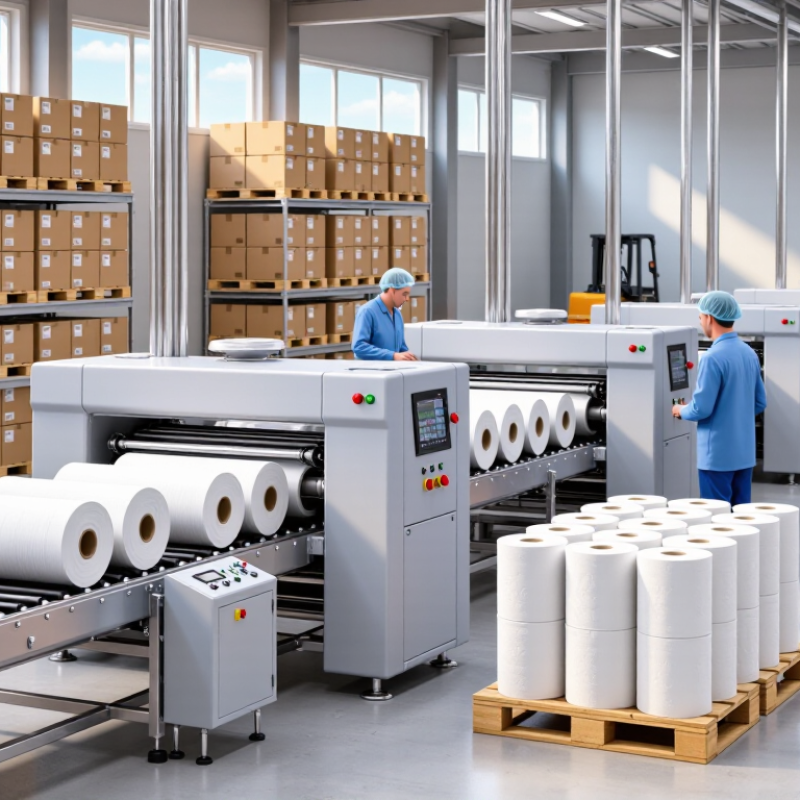
Global Market Benchmarks: CAGR, Trade Value, and 2024 Demand Data
Global buyers are tracking paper kitchen towel demand more closely in 2024. Industry estimates commonly place annual market growth near 5% to 7% through 2030. The range varies by region and product definition. Kitchen towels are often grouped with broader household paper goods. That makes direct comparisons difficult.
Trade value remains a useful benchmark. Customs data for household and sanitary paper articles exceeds US$10 billion annually across major trading routes. Kitchen towels represent only part of this value. Importers should check product codes, roll weights, carton counts, and destination duties. These details can change the real purchase cost significantly. Demand is strongest where food-service activity, modern retail, and household hygiene spending are expanding.
Experienced buyers also examine 2024 order patterns, not only headline growth. Larger rolls support commercial users, while softer two-ply products suit retail shelves. Recycled fiber content, absorbency, perforation quality, and packaging efficiency affect repeat orders. A reliable manufacturer should provide stable samples, batch records, and practical lead-time estimates. Small trial shipments reveal more than polished sales claims.
The picture is not perfectly clean. Some market reports combine napkins, tissues, and towels, overstating kitchen towel demand. Freight volatility can also distort trade value. Buyers need updated customs checks and independent quality testing. Low prices may hide weak wet strength or excessive packaging waste. That risk deserves attention.
Manufacturer Types by Ply Count, 18–25 GSM, Roll Size, and Output
Global buyers should classify paper kitchen towel manufacturers by product structure, not factory size alone. One-ply towels often target value markets, while two-ply products offer better absorption and hand feel. Three-ply lines serve premium or heavy-duty applications. Smithers’ global tissue market outlook identifies continued demand for higher-performance tissue products, driven by hygiene expectations and foodservice use.
The 18–25 GSM range needs careful testing. An 18 GSM sheet can reduce material cost, but it may tear near a wet sink. Around 21–23 GSM often balances softness, strength, and converting efficiency. A 25 GSM towel feels more substantial, although it can increase shipping weight. Roll size also changes the buying decision. Common variables include sheet width, roll diameter, perforation length, and core diameter. Large-format rolls suit dispensers and commercial kitchens. Compact rolls fit household retail packs. Output categories matter too. Small manufacturers may produce several containers monthly, while automated high-output plants can support stable, repeated orders. Grand View Research’s tissue-paper market analysis reports strong global growth through 2030, but market expansion does not guarantee consistent quality.
Tips: Request samples from each output tier. Test wet strength, lint, perforation accuracy, and roll hardness. Ask for GSM inspection records, not only catalogue claims. A polished specification sheet can still hide uneven winding or weak bonding. I have found that buyers sometimes overvalue speed and underestimate changeover losses. That mistake becomes expensive during seasonal demand. Check the actual production schedule, backup machinery, and carton compression performance before approving a supplier.
Top Paper Kitchen Towel Manufacturers for Global Buyers
Typical manufacturer benchmarks by ply count, 18–25 GSM, roll size, and estimated monthly output
The chart compares common commercial kitchen towel specifications with indicative monthly converting capacity.
Small converters commonly focus on standard 1-ply and 2-ply rolls, while larger integrated manufacturers can support higher-volume 2-ply and 3-ply production.
Output figures are generic industry benchmarks and are not linked to any specific company or brand.
Top Producers Ranked by Capacity, Export Volume, and Regional Coverage
Top Paper Kitchen Towel Manufacturers for Global Buyers
Capacity leaders usually operate integrated pulp, paper, and converting facilities. Smithers’ 2024 tissue market outlook expects global tissue demand to keep growing through 2029. FAOSTAT reported global paper and paperboard production at roughly 420 million tonnes in 2023. Only a small share becomes kitchen towel, but mill scale still affects pricing, consistency, and supply security. Large producers often exceed 100,000 tonnes of tissue capacity annually. Their strongest advantage is stable parent-roll supply.
Export volume gives a different ranking. UN Comtrade’s 2023 HS 4818 data tracks household paper products across reporting economies. High-volume exporters typically serve nearby markets first, then ship full containers overseas. European suppliers benefit from dense road networks. Asian suppliers often combine larger container programs with broader private-label production. North American mills usually compete through regional coverage and shorter delivery times. These patterns matter more than factory size alone.
Regional coverage should include warehouses, converting sites, and verified port access. I would examine monthly output, rejected-roll rates, basis weight, and recycled-fiber content before signing. A supplier claiming wide coverage may rely heavily on one mill. That is a weakness. My ranking is not flawless because customs codes combine several household paper categories. Export data can also hide re-exports. Buyers should request audited production figures, recent shipment records, and certificates from recognized testing bodies. A polished catalogue is not proof of capacity.
Quality Standards: FSC, ISO 9001, BRCGS, and Food-Contact Compliance
Top Paper Kitchen Towel Manufacturers for Global Buyers
Quality begins with verified fiber, controlled production, and documented food-contact safety.
FSC’s 2023 facts report covers more than 160 million certified forest hectares worldwide. Buyers should request a valid chain-of-custody certificate for every relevant supplier. Recycled content also needs clear sourcing records. FSC certification does not prove food-contact compliance. That distinction matters.
ISO Survey 2023 recorded more than one million ISO 9001 certificates globally.
For kitchen towel manufacturers, certification should support measurable controls, not decorate a sales brochure. Check complaint records, batch coding, moisture consistency, tensile strength, and corrective actions. BRCGS Packaging Materials requirements add risk assessment, hygiene controls, traceability, and documented supplier approval. A factory may pass an audit and still struggle with one weak shift.
Food-contact evidence must match the destination market.
Request migration testing, chemical declarations, ink information, and laboratory reports linked to the exact product. Testing should reflect intended use, including contact time, temperature, and wet conditions. European Commission food-contact framework data and United States regulatory guidance both emphasize material safety and contaminant control. Reports can be incomplete. That is normal, but unresolved gaps deserve attention. A clean-looking roll is not enough. Packaging, storage humidity, and transport conditions can change performance before the towel reaches a kitchen.
Buyer Scorecard: MOQ, 15–30-Day Lead Times, Pricing, and Private Label Support
Top Paper Kitchen Towel Manufacturers for Global Buyers
A practical buyer scorecard should measure more than the lowest quoted price. Start with minimum order quantity, or MOQ. A manageable MOQ reduces storage pressure and protects cash flow. However, very low MOQs may carry higher unit costs. Request samples before comparing offers. Check sheet count, roll width, ply, embossing, absorbency, and packaging strength.
For standard paper kitchen towels, a 15–30-day lead time can be realistic after artwork approval and deposit confirmation. Ask whether this period includes production, inspection, and packing. It often does not. Confirm the shipping date in writing. Production capacity can change during seasonal demand. One missed assumption can disrupt a retail launch.
Pricing should be reviewed as a full cost, not a factory number alone. Compare product cost, packaging, tooling, inspection, and freight separately. A low quote can still mislead. Private label support also deserves a clear score. Check artwork templates, carton markings, barcode placement, color consistency, and proof approval procedures. Reliable suppliers should explain revisions without vague promises. The scorecard is useful, but not perfect. Leave space for quality variation, communication speed, and corrective action. A supplier that responds clearly to a damaged sample may be safer than one offering a cheaper first order.
Top Paper Kitchen Towel Manufacturers for Global Buyers - Buyer Scorecard: MOQ, 15–30-Day Lead Times, Pricing, and Private Label Support
Comparative buyer scorecard for export-oriented paper kitchen towel suppliers. Pricing is shown as an indicative FOB range for standard 2-ply rolls and should be confirmed by quotation.
| Supplier Profile |
Primary Production Region |
Typical MOQ
(Cartons) |
Standard Lead Time |
Indicative FOB Price
(USD/Carton) |
Private Label
Support |
Custom Packaging
MOQ |
Sample
Turnaround |
Buyer Score
(100) |
| Supplier Profile A |
East Asia |
500 |
18–25 days |
$18.50–$24.00 |
Advanced |
500 cartons |
5–7 days |
91 |
| Supplier Profile B |
Southeast Asia |
800 |
20–30 days |
$17.80–$23.50 |
Advanced |
800 cartons |
7–10 days |
88 |
| Supplier Profile C |
South Asia |
1,000 |
25–30 days |
$15.90–$21.00 |
Standard |
1,000 cartons |
7–12 days |
84 |
| Supplier Profile D |
East Asia |
300 |
15–22 days |
$21.00–$28.50 |
Advanced |
300 cartons |
4–6 days |
93 |
| Supplier Profile E |
Eastern Europe |
600 |
18–28 days |
$22.50–$30.00 |
Standard |
600 cartons |
6–9 days |
86 |
| Supplier Profile F |
Latin America |
750 |
22–30 days |
$20.50–$27.00 |
Standard |
750 cartons |
7–10 days |
82 |
| Supplier Profile G |
North America |
400 |
15–25 days |
$26.00–$34.00 |
Advanced |
400 cartons |
5–8 days |
89 |
| Supplier Profile H |
Middle East |
1,200 |
25–30 days |
$16.50–$22.50 |
Basic |
1,200 cartons |
10–14 days |
78 |
Scoring basis:
MOQ 15%, lead-time reliability 20%, price competitiveness 20%, private-label capability 20%, packaging flexibility 10%, sampling speed 5%, and export-readiness documentation 10%.
Prices vary according to paper grade, sheet count, roll length, embossing, packaging materials, order volume, and destination requirements.
Conclusion
This guide provides a practical overview of the global Paper Kitchen Towel manufacturing market, combining market benchmarks such as CAGR trends, trade value, and 2024 demand indicators. It explains how manufacturers differ by ply count, 18–25 GSM material options, roll dimensions, production capacity, and supply flexibility. Buyers can use these factors to compare suppliers according to product consistency, manufacturing scale, export volume, and regional coverage.
The article also reviews important quality and compliance considerations, including FSC certification, ISO 9001 systems, BRCGS practices, and food-contact requirements. A buyer scorecard helps evaluate MOQ, typical 15–30-day lead times, pricing structures, packaging options, and private-label support. By considering capacity, quality documentation, logistics performance, and customization capabilities together, global purchasers can identify reliable production partners and select Paper Kitchen Towel products that align with their market positioning, retail needs, and supply-chain goals.

 BAODA PAPER