A Toilet Paper Jumbo Roll is the large parent roll used to manufacture smaller bathroom tissue rolls. It is not designed for direct household use. Instead, converters unwind, slit, emboss, perforate, and rewind the material into retail or commercial formats. The roll may measure several meters in diameter and contain hundreds of kilograms of paper, depending on machine width, ply, basis weight, and core specifications.
Industry data shows why this format matters. Grand View Research valued the global tissue paper market at approximately US$87 billion in 2023 and projected continued growth through 2030. Its analysis links demand to hygiene awareness, population growth, and expanding commercial facilities. Smithers’ tissue industry forecasts also identify converting efficiency, recycled fiber use, and energy management as important market pressures. These reports do not describe every jumbo roll equally. Quality changes with fiber composition, moisture, softness, tensile strength, and winding tension.
In practical production, a poorly wound roll can create telescoping edges, web breaks, or uneven sheet counts. Small defects become expensive at high speed. That is why buyers usually examine roll diameter, width, core size, paper grade, packaging, and batch consistency before purchasing Toilet Paper Jumbo Rolls. Specifications still vary between suppliers. Some product pages explain them poorly. That gap deserves attention. A reliable definition must connect the roll’s physical design with its role in converting operations, warehouse handling, and final product quality.
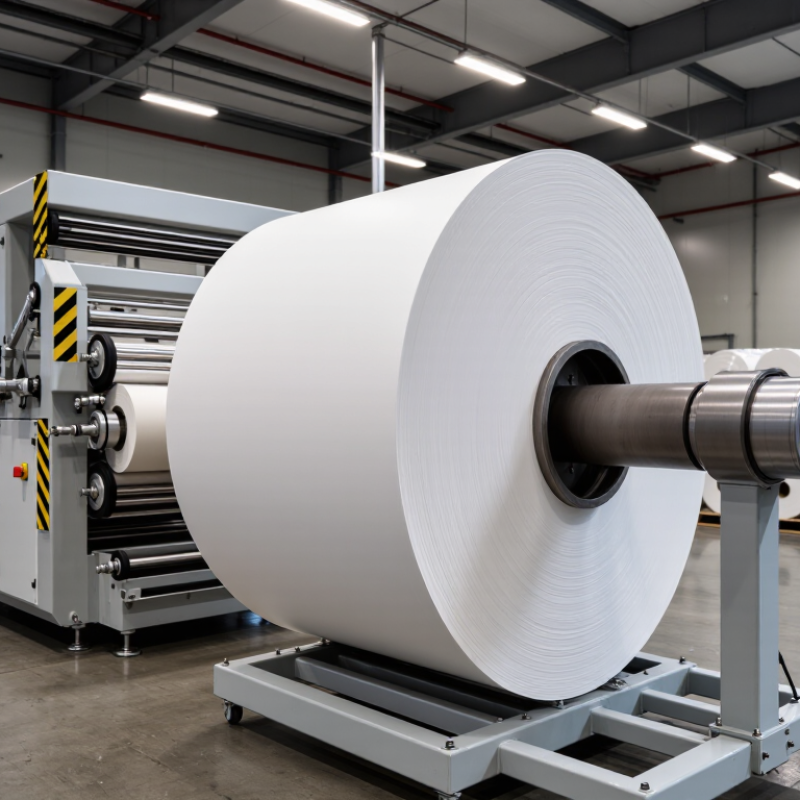
A toilet paper jumbo roll is a large, continuous reel of tissue paper produced before the converting stage. It is much wider and heavier than a retail roll. The reel may contain hundreds of kilograms of tissue, depending on its width, diameter, ply structure, and basis weight. After production, converting equipment unwinds the jumbo roll and cuts it into smaller logs for perforating, embossing, rewinding, and packaging.
Its industrial role is central to manufacturing efficiency. A stable jumbo roll keeps converting lines supplied with fewer interruptions. Operators check moisture, softness, tensile strength, sheet formation, and winding tension before release. These details matter. Excess moisture can weaken the web, while uneven tension may cause wrinkles or telescoping edges. The cardboard core must also fit the rewinder accurately. A small dimensional error can stop a fast production line.
In practical production, quality is not judged by appearance alone. A clean outer surface may hide poor bonding between plies or inconsistent perforation strength. Sampling from the reel helps identify these problems early. Storage conditions also matter; temperature changes can affect moisture balance and roll stability. Specifications guide decisions, but they are not infallible. A manufacturer may need to adjust machine speed, refining levels, or drying conditions after observing actual performance. That is where technical experience becomes valuable. The jumbo roll is not merely stored tissue; it is a controlled intermediate product connecting papermaking with high-volume toilet paper conversion.
| Dimension | Description or Typical Range | Industrial Role |
|---|---|---|
| Definition | A large parent roll of tissue paper produced by a paper machine before it is converted into consumer-sized toilet paper rolls. | Serves as the main tissue-paper feedstock for downstream converting operations. |
| Alternative names | Parent roll, jumbo tissue roll, or tissue mother roll. | These terms commonly describe the large-format roll supplied to a converting line; exact usage can vary by facility. |
| Roll width | Often around 1.8–2.8 m, depending on the paper machine and product format. | The web is slit into narrower lanes to match the required finished-roll width and converting equipment. |
| Roll diameter | Industrial parent rolls can be roughly 1.2–2.5 m in diameter. Actual dimensions depend on the machine and order. | A larger roll can provide longer production runs, while its size must remain within handling and machine limits. |
| Core | A rigid tube supports the wound roll. Core diameters such as 76 mm and 152 mm are used in some industrial applications. | The core interfaces with shafts or roll-handling equipment and must suit the unwinding system. |
| Basis weight | Toilet tissue commonly uses lightweight paper, often about 14–20 g/m² per ply. Product grades vary. | Basis weight affects material consumption, softness, strength, and the number of sheets that can be made from a roll. |
| Paper plies | The parent roll may be made as a single web or as separate webs that are combined during converting. | Combining plies allows converters to produce one-ply or multi-ply tissue products and adjust product characteristics. |
| Unwinding and web control | The parent roll is mounted on an unwinder and fed continuously into the converting line. | Tension control and accurate web tracking help limit breaks, wrinkles, and production interruptions. |
| Converting operations | Typical steps include embossing, ply bonding, perforating, rewinding, log cutting, and packaging. | These processes transform the wide parent web into individual rolls with the required texture, sheet count, and dimensions. |
| Quality considerations | Relevant checks include basis weight, moisture, tensile strength, caliper, formation, and roll winding quality. | Consistent incoming tissue helps maintain converting efficiency and finished-product quality. |
| Handling and storage | Large rolls require suitable lifting equipment and protection from moisture, contamination, and physical damage. | Safe handling and appropriate storage help preserve roll integrity and support reliable production. |
| Important qualification | Dimensions and paper properties are typical examples, not fixed specifications; they vary by mill, equipment, grade, and customer requirements. | Converters confirm roll specifications against their own machine limits and product standards before production. |
It is a wide, heavy parent roll made for industrial converting. It is not ready for direct consumer use.
Machines unwind the reel, emboss the tissue, add perforations, rewind it, cut logs, and package smaller rolls.
A stable roll keeps converting lines supplied longer. Fewer interruptions can reduce waste and improve production efficiency.
They check moisture, softness, tensile strength, basis weight, ply alignment, roll hardness, and winding tension.
Excess moisture may weaken the tissue and disturb winding stability. Softness can also change during storage.
Uneven tension can create wrinkles, loose edges, or telescoping sides. The roll may look acceptable but run poorly.
No. A clean surface can hide weak ply bonding or uneven perforation strength. Sampling remains necessary.
Store them in a clean, dry area. Avoid sudden temperature changes, which can upset moisture balance.
Yes. The core must fit the rewinder accurately. Even a small dimensional error can stop a fast line.
No. Trim loss and humidity can change actual results. A slower machine setting may sometimes save more material.
A Toilet Paper Jumbo Roll is a large, unfinished paper reel produced for industrial conversion into consumer toilet paper products. Its main specifications include web width, roll diameter, total length, ply structure, and GSM, all of which influence production efficiency, softness, strength, and final product capacity. These rolls allow manufacturers to process substantial amounts of tissue paper in continuous operations before converting it into smaller rolls or other finished formats.
Manufacturing typically involves pulp preparation, sheet forming, drying, creping, winding, and controlled packaging. Quality evaluation can be conducted according to ISO 12625 testing principles, with attention to basis weight, tensile strength, moisture, softness, and absorbency. During converting, Toilet Paper Jumbo Rolls are unwound, perforated, embossed when required, rewound, cut, and packed. Consistent quality data helps ensure reliable performance, efficient processing, and a satisfactory user experience in the finished toilet paper product.

 BAODA PAPER